
When Does Colorado Rafting Season End? A River-by-River Guide
Colorado rafting season generally runs from May into September, although the typical operating window differs by river. Clear Creek near Idaho Springs often runs from May through August, while the Blue River has a shorter, runoff-dependent season.
The Arkansas and Upper Colorado rivers may offer options later into summer, depending on the section and scheduled trips.
When Does Rafting Season End on Each Colorado River?
Colorado’s rivers follow different seasonal patterns. Snowmelt, reservoir operations, rainfall, and local river characteristics all influence when commercial rafting trips can run.
Here is a general guide to the seasonal windows travelers can use when planning:
| River | Typical seasonal window | What to know |
| Arkansas River | Mid-May to early September | A longer summer window on many commercial runs, with availability depending on the trip and river conditions |
| Clear Creek, near Idaho Springs | May through August | Snowmelt shapes early-season flows; many commercial trips wind down by mid-to-late summer |
| Blue River, near Frisco | Late May or June through early July | A short, release-dependent season that can vary with water availability |
| River | Typical seasonal window | What to know |
| Upper Colorado River, near Kremmling | May into early fall | Its longer seasonal window can provide options after some smaller rivers have slowed |
These are broad seasonal guides, not guaranteed opening or closing dates.
Whitewater rafting near Denver takes place on Clear Creek during its typical May-to-August season, the Blue River’s shorter June-to-July window, and Upper Colorado trips extending into early fall.
The Town of Frisco also notes that activity at its Ten Mile Creek Kayak Park typically follows runoff from May through July. Kayak-park timing does not establish commercial rafting availability, so check the specific trip schedule before making plans.
Why Do Some Rivers Stay Open Later Than Others?
The end of snowmelt does not automatically mean the end of rafting. Reservoir operations, tributaries, rainfall, and local river conditions all influence how long different sections remain suitable for commercial trips.
On certain Arkansas River sections, reservoir releases influence summer flows and can support rafting opportunities beyond the peak snowmelt period. The actual operating window depends on the river section, current conditions, and scheduled trips.
The Upper Colorado River follows a different seasonal pattern, with water availability influenced by conditions across its watershed and water management. This means its rafting opportunities may extend beyond the operating windows of some smaller, snowmelt-dependent rivers.
Check the individual trip schedule to confirm availability for your dates.
River flow is commonly measured in cubic feet per second (CFS), which indicates how much water passes a point each second. However, flow readings alone do not determine whether a trip can operate or how challenging it will be.
Guides also consider the river section, obstacles, current conditions, and the experience required for a particular run.
What Can You Expect From Late-Season Rafting?
Late-season rafting offers options for visitors planning a summer trip, including suitable runs for inflatable kayaks, known as duckies.
- Changing water conditions: As snowmelt recedes, river conditions can change, affecting the character of individual runs.
- Duckie opportunities: On suitable sections and at appropriate flows, inflatable kayaks let participants paddle their own craft and engage more directly with the water. Ask KODI about availability and whether a duckie trip suits your group.
- Convenient access from Denver: Clear Creek near Idaho Springs offers a nearby whitewater option for visitors staying in or around Denver. Visit Denver identifies it as one of the closest whitewater rafting options to the city.
How to Find a Trip Near the End of the Season
A statewide closing date is less useful than checking the river and trip that match your plans. As summer progresses, consider these steps:
- Start with your travel dates. Check which rivers have scheduled departures during your visit.
- Match the trip to your group. Review difficulty, minimum age and weight requirements, and any experience requirements.
- Confirm the launch location. Check the meeting point and departure details on the individual trip page before travelling.
- Check the details before booking. Confirm the meeting location, departure time, equipment included, and current availability.
At KODI Rafting, we help guests explore Colorado’s rivers through our seasonal trip options. Marking our 40th year in 2026, we continue to share the experience of rafting across different parts of the state. Whether you are looking at Clear Creek near Idaho Springs or an Arkansas River trip near Buena Vista, our individual trip pages are the best place to check current details and availability.
Ready to explore your options? Visit our Colorado whitewater rafting trips page to compare available experiences and find a trip that fits your dates and group.
Frequently Asked Questions
When does Colorado rafting season end?
Colorado rafting season generally runs from May into September. The closing window varies by river, so check the specific trip schedule for current availability.
Can I raft in Colorado after Labor Day?
Yes, some trips may operate after Labor Day, depending on the river, water conditions, and operator schedule. Check availability before booking.

Duckie Rafting on the Arkansas River: What Beginners Should Know Before Booking
Arkansas River duckie rafting offers a more hands-on way to experience Colorado whitewater. Instead of riding in a large raft, you paddle an inflatable kayak while a guide leads you down the river.
For beginners, choosing the right section and understanding water conditions matter as much as paddling ability.
If you are considering an inflatable kayak trip in Colorado, here’s what to know before booking your first duckie adventure.
What Is a Duckie?
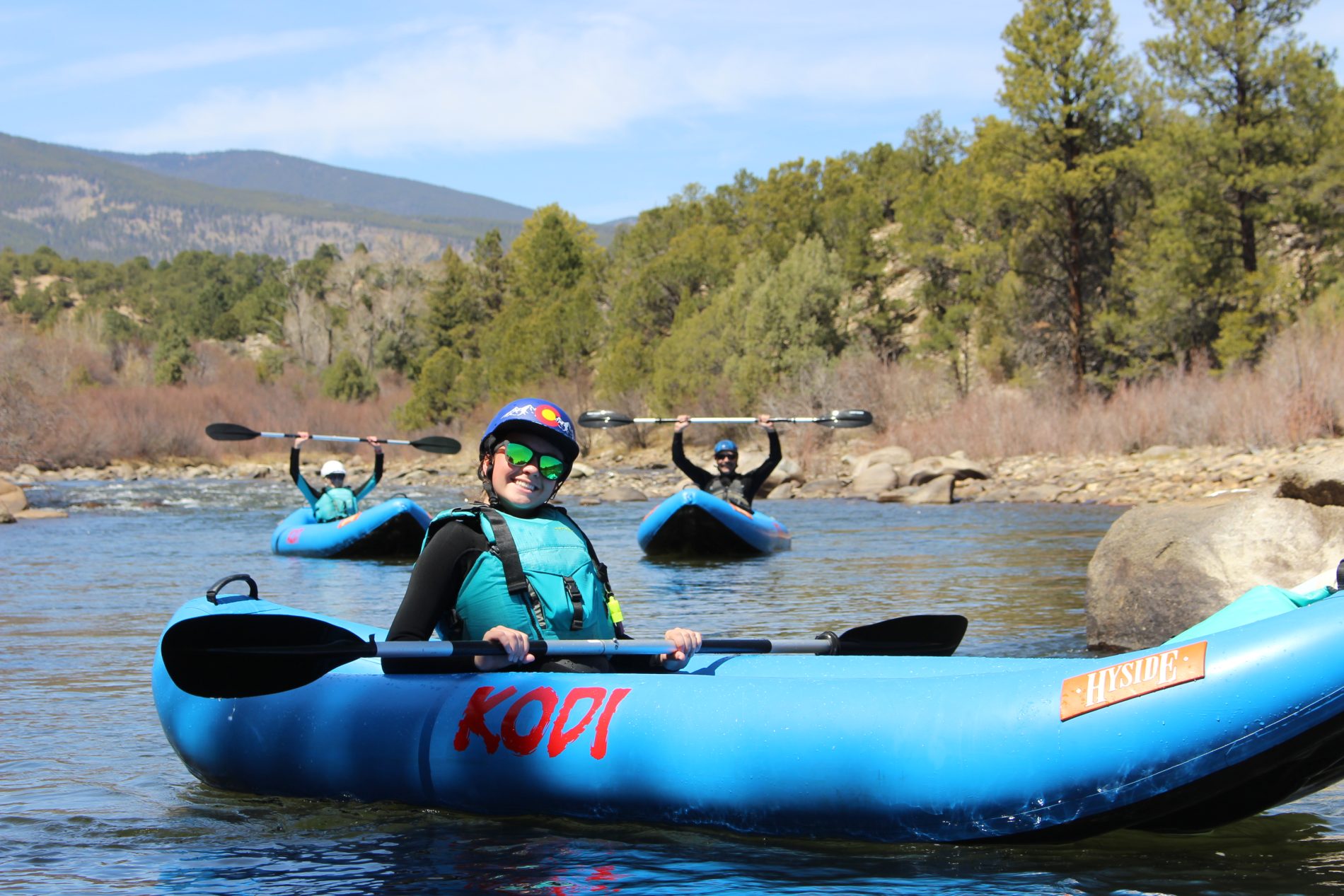
A duckie is a self-bailing inflatable kayak designed for moving water. Unlike a traditional kayak, it is an open inflatable boat rather than a craft with a closed cockpit.
You sit in the boat and use a double-bladed paddle to steer and move through the current. The self-bailing design allows water that splashes into the boat to drain through openings in the floor.
Because you control your own boat, duckie rafting requires more active participation than riding in a traditional raft. You should expect to paddle, respond to your guide’s instructions, and get wet.

For KODI Rafting’s Arkansas River duckie trips, participants must be at least 14 years old.
Duckie vs. Traditional Raft: Which Is Better for a Beginner?
The two experiences are different rather than one simply being better than the other.
| Factor | Duckie | Traditional Raft |
| Your role | Paddle and steer your own inflatable kayak | Paddle as part of a group |
| Boat | Individual inflatable kayak | Larger raft shared by multiple participants |
| Experience | More hands-on and active | More group-oriented |
| Exposure | More direct contact with waves and spray | Larger boat provides a different experience on the water |
| Best suited to | People who want to participate more actively | People who prefer a shared rafting experience |
A duckie does not mean you are on your own. Your guide leads the group, gives instructions, and helps you navigate the river.
KODI currently lists different Arkansas River duckie options. Before booking, review the current trip information for the latest difficulty rating and river conditions. The Arkansas River Half-Day Duckie is listed as a moderate Class II–III trip.
Is Duckie Rafting Suitable for First-Timers?
You do not need prior kayaking experience to try a guided beginner duckie trip. However, you should be comfortable participating actively and following your guide’s instructions.
Before booking, consider three things:
- Swimming and water comfort: You should be comfortable around moving water and prepared to follow the safety instructions provided by your guide.
- Physical effort: Paddling requires more active participation than sitting in a traditional raft.
- Confidence in moving water: Waves, splashes, and the movement of your own boat can feel more intense than riding in a larger raft.
There is also an important age requirement to consider. KODI’s Arkansas River Duckie trips are currently listed for participants ages 14 and older. If you are booking for a group with younger participants, check the available rafting alternatives rather than assuming they can join the duckie trip.
If you meet the age requirement and the idea of paddling through moving water sounds exciting rather than intimidating, a beginner-oriented trip can be a good introduction.
Which Arkansas River Section Should Beginners Choose?
Not every section of the Arkansas River provides the same experience. For a first duckie trip, the difficulty rating should be one of the first things you consider.
Big Bend Half-Day Duckie
The Big Bend Half-Day Duckie gives participants the opportunity to operate their own inflatable kayak while following a guide down the river.
KODI’s trip information provides details about the Big Bend Duckie experience, including the single-paddler boat setup. Before booking, review the current trip information for the latest difficulty rating and river conditions.
The Big Bend Duckie is a single-paddler experience, meaning each participant operates their own boat. Tandem duckies are not available.
For someone new to duckie rafting, consider your comfort with moving water, active paddling, and following a guide’s instructions when deciding whether this trip is right for you.
Arkansas River Half-Day Duckie
KODI lists the Arkansas River Half-Day Duckie as a moderate Class II–III trip. Compared with a less challenging section, it can require more active paddling and attention to the river.
If you are a first-time duckie paddler, consider your comfort with waves, current, and physical activity before choosing this option.
KODI Rafting offers different duckie experiences on the Arkansas River, allowing participants to select an option based on their experience and comfort level.
Water conditions can also change the character of a river section. A lower-flow day may look calmer, but lower water does not automatically make every rapid easier. Rocks, channels, current lines, and the shape of individual rapids all affect how the river feels.
What Happens on a Duckie Trip?
Before launching, you will check in, get fitted with the appropriate safety equipment, and receive instructions for the trip.
The safety briefing is an important part of the experience. You’ll learn how to handle your paddle, respond to the guide’s commands, and what to do if your boat flips or you enter the water.
Once you’re on the river, the guide leads the group while you manage your own boat. Expect a combination of paddling, calmer stretches, waves, splashes, and rapids. The experience is more active than simply sitting in a raft, which is precisely what attracts many people to duckies.
What Should You Wear and Bring?
Dress for getting wet rather than trying to stay dry.
Quick-drying clothing is preferable to cotton, which can remain wet and uncomfortable. Depending on the weather and water conditions, you may want additional thermal or splash protection.
You should also consider:
- Secure footwear suitable for getting wet
- Sun protection
- A way to secure glasses if you wear them
- A change of dry clothes for afterward
The exact equipment provided can vary by trip, so confirm what is included when you book.
Common First-Time Duckie Mistakes
A few small mistakes can make the first trip harder than it needs to be:
- Treating a duckie like a passive ride rather than an active paddling experience
- Ignoring the guide’s instructions once the rapids begin
- Wearing clothing that stays heavy and cold when wet
- Holding the paddle too tightly and tiring your arms early
- Assuming lower water automatically means easier conditions
- Focusing only on the rapids and forgetting to enjoy the scenery between them
When Is the Arkansas River Duckie Season?
Arkansas River rafting is seasonal, and trip availability depends on the time of year, river conditions, and the outfitter’s operating schedule.
KODI’s Arkansas River season generally runs through early September/Labor Day, so anyone planning a trip around late summer or September should confirm current operating dates and availability before booking.
This is especially important if you are reading this article outside the main rafting season. River conditions and commercial trip schedules can change from year to year.
Is Arkansas River Duckie Rafting Right for You?
Duckie rafting can be a good fit if you want more involvement than a traditional raft provides and like the idea of controlling your own inflatable kayak while staying with a guided group.
For a first trip, focus less on finding the biggest rapid and more on choosing an option that matches your age, experience, physical comfort, and confidence in moving water.
Remember that KODI’s Arkansas River Duckie trips are currently listed for ages 14+. When choosing a trip, review the current difficulty information for the specific section you are considering and make sure it matches your experience and comfort level.
The Arkansas River Half-Day Duckie provides a moderate Class II–III experience.
The best first duckie trip isn’t necessarily the most difficult. It is the one that gives you enough challenge to feel adventurous while still leaving you confident, engaged, and ready to paddle again.
Ready to Choose Your Arkansas River Duckie Trip?
Once you understand the age requirement, boat setup, and difficulty level, choosing a trip becomes much easier.
For the Big Bend Half-Day Duckie Trip, review the current trip information for the latest difficulty rating and availability. If you are looking for a moderate Class II–III challenge, review the Arkansas River Half-Day Duckie Trip.
Check current availability and start planning your Arkansas River duckie adventure.
FAQ: Arkansas River Duckie Rafting for Beginners
Can I go duckie rafting if I’ve never kayaked before?
Yes. Previous kayaking experience is not required for a guided beginner duckie trip. You will receive instructions before getting on the water, and your guide will lead the group throughout the trip.
What is the minimum age for KODI’s Arkansas River duckie trips?
KODI currently lists 14 as the minimum age for its Arkansas River duckie trips. Check the specific trip page before booking because age requirements and trip conditions can change.
How cold is the Arkansas River during rafting season?
The snowmelt-fed Arkansas River can remain cold even during summer. Water temperature varies with the season and conditions, so plan to get wet and follow the outfitter’s recommendations for appropriate cold-water protection.
Can I go duckie rafting by myself?
Each guest paddles their own boat on KODI’s Big Bend Duckie trip, and the group follows a guide. However, this does not necessarily mean every departure accepts a single-person reservation. If you are traveling alone, check the trip’s current booking availability and reservation requirements before making plans.
Are KODI’s Big Bend Duckies available as tandem boats?
No. KODI currently identifies its Big Bend Duckies as single-paddler boats, so participants should expect to operate their own duckie rather than share one with another guest.
Can I switch to a traditional raft if I change my mind?
Do not assume you can switch after booking or once the trip begins. If you are unsure whether a duckie or traditional raft is the better fit, ask KODI about available options and its change policy before your trip.