
Direct Answer
Are inflatable kayaks a good fit for Colorado’s low-water season?
Yes. Inflatable kayaks, often called “Duckies”, handle low-water Colorado rivers well because their flexible hulls absorb contact with exposed rocks and shallow riverbeds. They’re lighter and more forgiving than hard-shell kayaks, which makes them practical when flows drop and conditions get rocky in late summer and early fall.
Introduction
When Colorado’s snowmelt slows down, river flows drop noticeably. Shallow channels, exposed rock gardens, and tighter lines become the norm across popular runs like the Upper Colorado and Arkansas Rivers.
That shift in conditions changes what gear makes sense on the water. That’s exactly where inflatable kayaks, better known as Duckies, start to shine. Here’s a practical look at why, and what inflatable kayak trips on Colorado rivers actually look like.
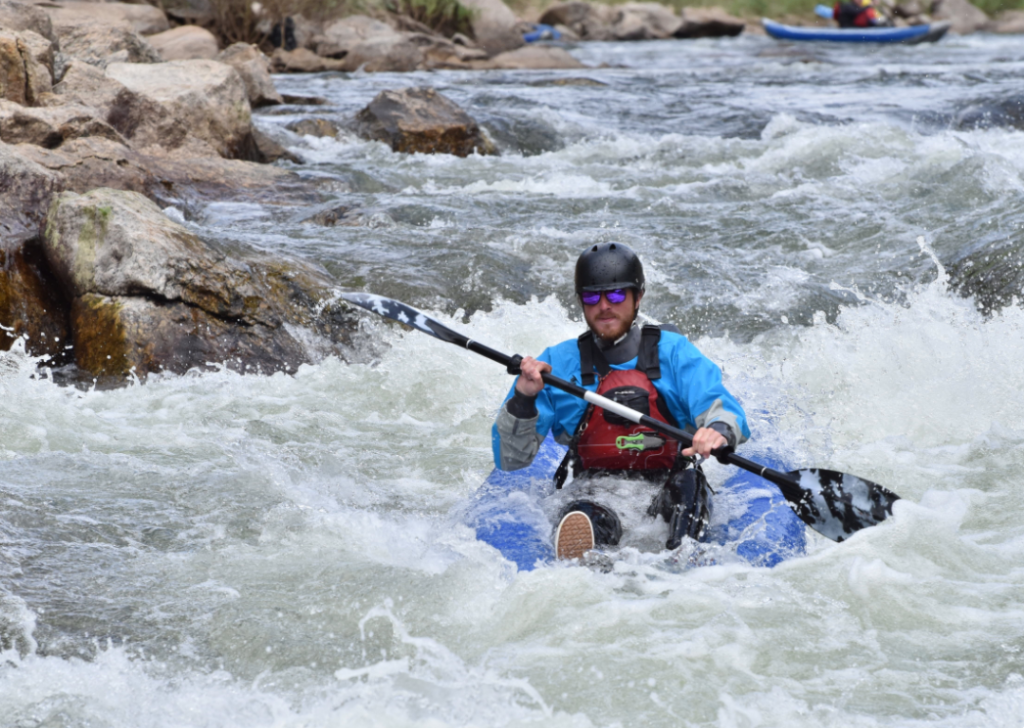
What Low-Water Season Looks Like on Colorado Rivers
Low-water season in Colorado generally runs from late July through early October, after the main spring runoff has passed. During this window:
- River flows drop across the most popular sections
- Rocks and shallow areas become more exposed
- Some rapids ease off; others get more technical and require precise lines
- Canyon walls, wildflowers, and wildlife are more visible with calmer water
Runs on the Upper Colorado River and Arkansas River, including sections like Big Bend, take on a noticeably different character during this period compared to peak spring flows.
Why Inflatable Kayaks Suit Low-Water Conditions
1. They Handle Rock Contact Better
Hard-shell kayaks scratch, gouge, and crack when they hit shallow rock. Inflatable kayaks are built from thick, reinforced material that flexes on impact rather than taking damage. On Colorado’s rocky low-water runs, that makes a real practical difference.
2. Lighter and More Responsive
Duckies are lighter than rigid kayaks and respond quickly to paddle input. In tight, technical water, which is more common when flows are low, that responsiveness helps paddlers make quick corrections and navigate narrower channels.
3. Shallower Draft
Inflatable kayaks sit higher on the water than hard shells. That shallower draft lets them float through sections where a rigid boat would drag or stop. On low-water Colorado runs, a few extra inches of clearance matter.
4. Accessible Without Being Tame
The Duckie’s stable design makes it manageable for paddlers with little prior experience. At the same time, paddling your own boat through Class II and III whitewater is genuinely engaging; you are reading the river, choosing your line, and feeling every wave firsthand.
Inflatable Kayak vs. Hard-Shell Kayak on Low-Water Rivers
| Feature | Inflatable Kayak (Duckie) | Hard-Shell Kayak |
| Rock impact tolerance | Flexes and absorbs contact | Scratches and cracks |
| Draft depth | Shallow — suits low water well | Deeper — more prone to grounding |
| Weight | Lighter and easier to handle | Heavier |
| Beginner accessibility | High | Moderate |
| Repairability on the river | Simple patch kit | Difficult |
| Guided tour availability | Yes — multiple options in Colorado | Limited |
Duckie Kayak Trips Available in Colorado
KODI Rafting runs several inflatable kayak tours across Colorado rivers, ranging from calm beginner-friendly floats to more technical half-day runs. All Duckie trips follow a guide; you are paddling your own boat, but you’re not on your own.
Upper Colorado River Half Day Duckie Trip
- River: Colorado River
- Difficulty: Class I–II (Beginner)
- Departure Times: 9:15 AM and 1:30 PM
- Age: 14+ / call for details about younger participants
- Price: Starting at $130 per person
This section of the Upper Colorado moves through canyon walls, forests, and open meadows. Rapids are mild, and guides cover the area’s natural and local history along the way. A good starting point for anyone new to kayaking.
Big Bend Half Day Duckie Trip
- River: Arkansas River
- Difficulty: Class II (Beginner)
- Departure Times: 9 AM and 1 PM
- Age: 14+ / call for details about younger participants
- Price: Starting at $130 per person
Big Bend is a calmer stretch of the Arkansas River with winding turns and splashy Class II rapids. The pace is manageable, which makes it a solid option for first-time Duckie paddlers.
Arkansas River Half Day Duckie Trip
- River: Arkansas River
- Difficulty: Class II–III (Moderate)
- Departure Times: 9:15 AM and 1:15 PM
- Age: 14+ / call for details about younger participants
- Price: Starting at $130 per person
A step up in difficulty from the Big Bend section. Class II–III rapids on the Arkansas require more active paddling and quicker decision-making. Better suited for paddlers who have some river experience or are comfortable with moving water.
Upper Colorado River Full Day Duckie Trip
The full-day version of the Upper Colorado trip covers more river at a relaxed pace. Class I–II water throughout. Paddlers can go solo or share a tandem Duckie. Depending on river conditions, some trips may even include a stop near natural hot springs along the route. All duckies follow a guide.
Duckie Add-On
For groups that want to try both, the Duckie add-on lets participants swap between the raft and a Duckie at certain points during a standard raft trip. It’s a great option for families and groups with different comfort levels, allowing some participants to paddle a Duckie while others enjoy the stability of a guided raft.
Who Suits Inflatable Kayak Tours in Low-Water Season?
Low-water season works for a range of paddlers, but it’s worth being honest about what fits who.
Generally, a good match:
- First-time kayakers who want a guided, lower-stakes introduction to paddling their own boat
- Families where adults want to kayak while younger kids ride in the guided raft alongside
- Intermediate paddlers looking for a more hands-on experience than group rafting
- Visitors in late summer or fall who still want a river day when flows are lower
It is worth speaking with KODI before booking if:
- Children under 14, contact KODI directly, as exceptions may apply depending on conditions and the trip.
- For paddlers with no river experience who are considering Class III water, starting on a Class I–II section first makes more sense.
- For groups with very mixed skill levels, the Duckie add-on may be a more flexible fit.
Low water doesn’t automatically mean easy water. Rocky, shallow sections can be more technical than higher flows in certain ways. Having a guide in front sets the line and keeps the group oriented.
Where Duckie Kayak Tours Run in Colorado
KODI Rafting’s inflatable kayak tours are accessible from several Colorado towns and mountain communities:
- Breckenridge
- Buena Vista
- Denver
- Dillon
- Frisco / Copper Mountain
- Idaho Springs
- Keystone
- Kremmling
- Silverthorne
Ready to Try a Duckie?
Whether you’re looking for a beginner-friendly float or a more technical Arkansas River adventure, Duckie trips offer one of the most hands-on ways to experience Colorado whitewater.
KODI Rafting offers guided inflatable kayak trips on the Arkansas River and Upper Colorado, with options for first-time paddlers and experienced adventurers alike.
👉 Explore Duckie trips at whitewatercolorado.com
📞 Call (877) 747-7238 to find the right trip for your experience level.
Frequently Asked Questions
Q: What is a Duckie kayak?
A Duckie is an inflatable kayak, a lightweight, air-filled boat that one or two paddlers control independently on the river. Unlike a group raft, you’re steering and paddling your own vessel. The name is informal but widely used among Colorado River outfitters.
Q: Are inflatable kayaks safe for Colorado whitewater?
Every trip is led by an experienced river guide who helps set the line, provides instruction, and supports paddlers throughout the trip.
Q: Do I need kayaking experience to join a Duckie tour?
Not for beginner trips. The Upper Colorado and Big Bend Duckie trips are designed for paddlers with no prior kayaking experience. The Arkansas River Half Day trip involves Class III water and suits those more comfortable with moving water.
Q: What’s the minimum age for Duckie tours?
Most trips require participants to be 14 or older. For younger participants, contact KODI Rafting directly at (877) 747-7238, eligibility can vary by trip and conditions.
Q: Can I combine rafting and kayaking on the same trip?
Yes. The Duckie add-on option lets your group alternate between a standard raft and a Duckie during the same trip, which works well for groups with mixed preferences.
Q: When does the low-water season run in Colorado?
Generally, late July through early October, after the peak spring runoff subsides. River conditions vary by location and year, so checking current river conditions before your trip is always a good idea.