Introduction
Colorado may be known for mountains and rivers, but it’s also one of the best places in the country for stand-up paddleboarding. From calm Front Range reservoirs to scenic alpine lakes, paddlers can find everything from beginner-friendly flatwater to high-elevation adventures.
Whether you are a beginner looking for a calm reservoir close to Denver or an experienced paddler ready to explore alpine lakes above 8,000 feet, Colorado has the water and the backdrop to match. Here’s where to go, what to expect, and everything you need before you launch this summer.
What Makes Colorado Great for Paddleboarding?
Most landlocked states struggle with SUP options. Colorado is the exception.
- 2,000+ lakes and reservoirs ranging from calm urban flatwater to remote high-altitude lakes
- Stunning mountain backdrop views that most coastal paddlers can’t access
- No SUP registration required, non-motorized paddleboards don’t need to be registered in Colorado; just pay the applicable state park entrance fee and carry a Coast Guard-approved PFD per person
- Morning calm windows, Colorado’s high altitude creates predictable afternoon wind patterns; mornings are almost universally smooth and glassy
- Rental availability outfitters like Rocky Mountain Paddleboard operate at multiple Front Range reservoirs from May through October
One critical rule most competitors skip: Boulder Reservoir requires a separate boat permit for all watercraft, including SUPs, in addition to the standard entry fee. Don’t show up assuming your state park pass covers everything; check each location’s specific rules before you go.
Best Places for Stand-Up Paddleboarding in Colorado This Summer
1. Chatfield Reservoir — Best All-Around SUP Spot Near Denver
Location: Littleton (south Denver), Chatfield State Park
Skill Level: Beginner to Intermediate
Entry Fee: Colorado State Parks pass or daily vehicle fee
Rentals: Available on-site from $40/hour (May 1 – September 30)
Best For: Day-trippers, families, first-timers
Chatfield is the most practical starting point for most visitors. The reservoir covers 1,450 acres of generally calm flatwater, surrounded by the wide-open skies of the Front Range. It’s large enough to offer a meaningful paddling experience without the exposure risks of high-alpine lakes.
On-site rentals include the board, paddle, and life jacket, plus a brief intro to SUP technique. No experience required, and no gear hauling. That combination makes it the go-to for first-time paddlers visiting from out of state.
Insider tip: Arrive by 8–9 AM on weekends. The water is glassiest in the morning, parking fills quickly by mid-morning, and afternoon winds can make the surface choppy.
2. Boulder Reservoir — Best for SUP Yoga and Intermediate Paddlers
Location: North Boulder, Boulder County
Skill Level: Beginner to Intermediate
Entry Fee: $7/adult (summer season, Memorial Day to Labor Day) + separate boat permit required
Rentals: Available through local outfitters
Best For: SUP yoga practitioners, fitness paddlers, nature lovers
Boulder Reservoir is one of Colorado’s most popular paddleboarding destinations, calm, accessible, and framed by views of the Flatirons. It’s also one of the most well-regulated, which keeps the water clean and the experience quality high.
What competitors miss: Before visiting Boulder Reservoir, be aware that all paddleboards require a separate boat permit in addition to the standard entry fee. Contact Boulder Parks and Recreation before your visit to arrange it. Also note: the reservoir enforces strict aquatic invasive species rules; boards must be cleaned and dried for at least 10 days before bringing them from another body of water.
SUP yoga classes operate here regularly throughout the summer. If that’s your thing, it’s the best venue in the state.
3. Blue Mesa Reservoir — Best for Distance Paddling and Views
Location: Curecanti National Recreation Area, near Gunnison
Skill Level: Intermediate to Advanced
Entry Fee: National Recreation Area pass
Best For: Experienced paddlers, distance touring, canyon exploration
Blue Mesa is Colorado’s largest body of water, a sprawling reservoir within the Curecanti National Recreation Area, roughly 20 miles of paddleable surface framed by dramatic canyon walls and blue sky. The Lake Fork arm past Sapinero offers a narrower canyon paddle that feels genuinely remote, winding upriver until you reach the natural inflow.
For paddlers who want mileage and scenery over convenience, Blue Mesa is the top pick in the state.
Weather note: Afternoon thunderstorms develop quickly at elevation. Always check the forecast and plan to be off the water by early afternoon on unstable days.
4. Grand Lake: Most Scenic Alpine Setting
Location: Grand Lake, near Rocky Mountain National Park
Skill Level: Intermediate (cold water awareness required)
Entry Fee: Town/park fees apply
Best For: Nature lovers, photographers, experienced paddlers
Grand Lake is Colorado’s largest natural lake and sits at over 8,300 feet on the west side of Rocky Mountain National Park. The scenery is extraordinary: snowcapped peaks, dense pine forests, and the kind of reflection on the water that often encourages paddlers to pause and take in the scenery.
That elevation means cold water year-round, fast-changing weather, and higher physical demands than Front Range reservoirs. Build in extra acclimatization time if you’re visiting from lower altitudes, and always paddle with a partner here.
5. Horsetooth Reservoir — Best for Fort Collins Visitors
Location: Fort Collins
Skill Level: Beginner to Intermediate
Entry Fee: Larimer County Parks daily fee
Best For: Fort Collins locals, beginner paddlers, camping combos
Horsetooth is seven miles long, set against red sandstone ridges, and easily accessible from Fort Collins. The calm water and consistent summer conditions make it ideal for beginners or families combining paddling with camping and hiking nearby.
Morning hours are reliably calm. Afternoons can bring wind off the ridgelines, especially along the western shore.
6. Union Reservoir (Longmont) — Best for Uncrowded Flatwater
Location: Near Longmont
Skill Level: Beginner
Entry Fee: Daily watercraft fee (in addition to park entry)
Rentals: Rocky Mountain Paddleboard operates on-site
Best For: Quieter experience, SUP yoga, meditative paddling
Union Reservoir is one of the most underrated SUP spots in Colorado. Less crowded than Chatfield or Boulder Reservoir, with calm water, Front Range views, and an active SUP yoga community. Rocky Mountain Paddleboard offers rentals and instruction here seasonally.
SUP Spot Comparison at a Glance
| Location | Skill Level | Rentals | Entry Fee | Best Feature |
| Chatfield Reservoir | Beginner–Intermediate | Yes, from $40/hr | State Parks pass | Convenient, calm, great for beginners |
| Boulder Reservoir | Beginner–Intermediate | Yes | $7 + boat permit | SUP yoga, clean flat water, Flatirons views |
| Blue Mesa Reservoir | Intermediate–Advanced | Limited | NRA pass | Colorado’s largest water, canyon arms |
| Grand Lake | Intermediate | Limited | Town/park fees | Most scenic alpine setting in the state |
| Horsetooth Reservoir | Beginner–Intermediate | Yes | Larimer County fee | Fort Collins access, red rock scenery |
What You Need to Know Before You Paddle in Colorado
PFD requirement: Colorado law requires a Coast Guard-approved life jacket accessible on board for every person paddling. Children 12 and under must wear one at all times on the water.
No registration needed: Non-motorized SUPs don’t require boat registration in Colorado. However, specific locations (like Boulder Reservoir) require separate boat permits — always check before arriving.
Aquatic invasive species (AIS): Colorado takes invasive species seriously. Clean your board thoroughly and allow at least 10 days to dry before launching it at a new body of water. Some reservoirs enforce this strictly.
Afternoon wind is real: Colorado’s high altitude creates consistent afternoon thermal winds. The general rule: paddle in the morning, rest or hike in the afternoon. Most experienced Colorado paddlers are on the water by 7–9 AM.
Inflatable vs. hard board: For Front Range reservoirs and calm lakes, inflatable paddleboards perform comparably to hardboards and are far easier to transport and store. They’re the practical choice for most Colorado summer paddlers.
Conclusion
Colorado rewards paddlers who show up prepared. The water is cold, the afternoon wind is reliable, and the altitude is real, but so is the scenery, and no coastal destination quite matches what you’ll see from the middle of Blue Mesa Reservoir or Grand Lake on a clear summer morning.
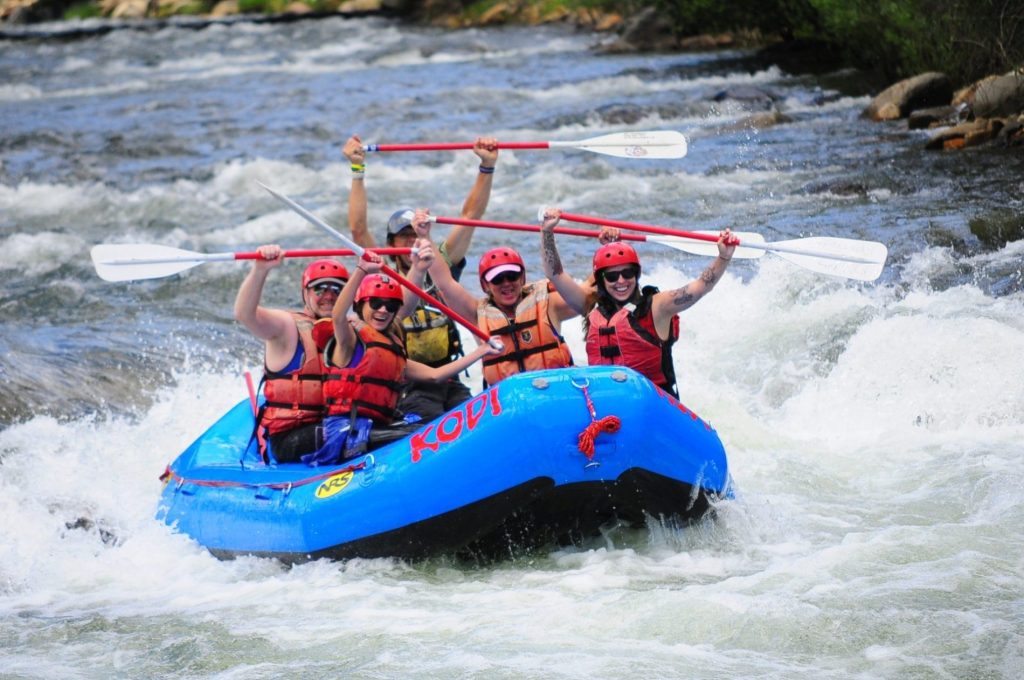
Whether you’re paddling across a calm reservoir or exploring a high-alpine lake, Colorado offers some of the most scenic paddleboarding destinations in the country. For visitors looking to experience Colorado’s waterways from a different perspective, guided rafting and inflatable kayak trips can add another layer of adventure to your summer itinerary.
Frequently Asked Questions
Q: Do you need a license or permit to paddleboard in Colorado?
Non-motorized paddleboards do not require a boat license or registration in Colorado. You must pay applicable state or county park entry fees and carry a Coast Guard-approved PFD for each person. Some locations, particularly Boulder Reservoir, require an additional boat permit for all watercraft, including SUPs. Check each location’s rules before you go.
Q: When is the best time of year to paddleboard in Colorado?
The season runs from May through October. June through August offers the warmest air temperatures and the widest rental availability. Morning hours — typically 7–10 AM — offer the calmest water conditions before afternoon winds develop. High-alpine lakes like Grand Lake are best visited in July and August when the weather is most stable.
Q: Can you paddleboard on Colorado rivers?
Yes, but it’s a significant step up from lake paddling. The Colorado River has Class I sections suitable for experienced flatwater paddlers, but river-specific hazards (strainers, pin rocks, low-head dams, cold water) require proper preparation. Always use a quick-release leash and a Type III or V PFD on moving water, and consider going with a guide for your first river SUP experience.
Q: Where can I rent a paddleboard in Colorado?
Rentals are available at most major reservoirs. Rocky Mountain Paddleboard operates at Chatfield Reservoir, Aurora Reservoir, Union Reservoir, and other Front Range locations from May through October. Chatfield offers hourly rentals from $40, including board, paddle, and life jacket.
Q: Is stand-up paddleboarding hard for beginners?
Most beginners can stand and balance within 10–15 minutes in calm water. Starting on a wide, stable beginner board (32+ inches wide) on flat water makes the learning curve gentle. Calm reservoirs like Chatfield and Horsetooth are ideal learning environments. Starting on the knees and working up to standing is the standard approach most instructors recommend.
Q: Are inflatable paddleboards good enough for Colorado lakes?
Yes. For flat-water lakes and reservoirs, which cover the majority of Colorado SUP destinations, high-quality inflatable SUPs perform comparably to hardboards. Their portability is a significant advantage when transporting from urban areas. They’re the practical choice for most visitors and are what most rental fleets use.
Q: Is paddleboarding easier than kayaking?
Kayaking usually feels easier at first because you’re seated and more stable. However, most beginners can learn the basics of paddleboarding quickly, and many enjoy the greater freedom of movement and the views it provides.
Q: Can beginners learn paddleboarding in one day?
Yes. Most beginners can learn to stand, balance, and paddle comfortably within their first session, especially on calm water and with a stable beginner-friendly board.