
| Quick AnswerClass III rapids are moderate to moderately difficult whitewater sections featuring irregular waves, strong currents, and narrow passages that require maneuvering. They are suitable for beginners with guidance and intermediates paddling independently. Most outfitters recommend a minimum age of 7–12, depending on the specific run and river conditions. |
Introduction
If you’re researching a Colorado rafting trip, chances are you’ve come across the term “Class III rapids.” It’s one of the most common whitewater ratings you’ll see, and for many paddlers, it’s where rafting gets really fun.
In Colorado, some of the most popular Class III rafting sections include Browns Canyon on the Arkansas River and parts of the Blue River near Breckenridge. These runs are known for delivering exciting whitewater without the intensity of more advanced Class IV and V sections.
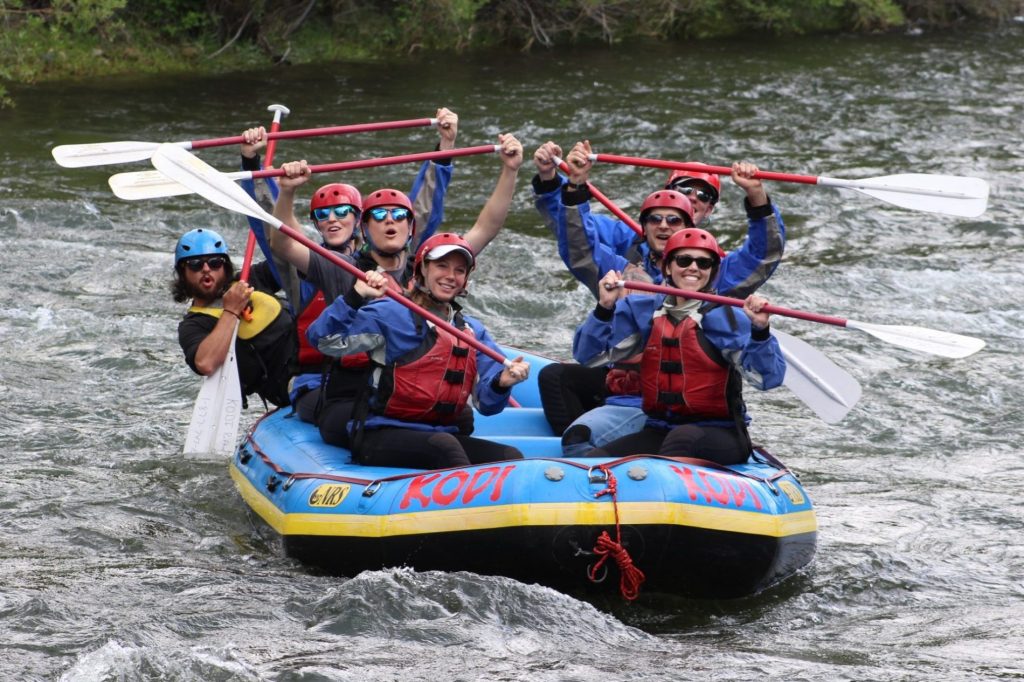
What Are Class III Rapids? (The International Scale Explained)
The International Scale of River Difficulty, also known as the Whitewater Classification Scale, rates rivers from Class I (flatwater) to Class VI (essentially unrunnable and life-threatening). Class III sits in the middle of this scale and is described as:
- Whitewater with moderate, irregular waves that may be difficult to avoid.”
- Strong currents and possible narrow passages requiring maneuvering.
- Complex moves are required, but routes are generally clear to experienced paddlers.
- Self-rescue is usually possible if a swimmer ends up in the water.
In practical terms, this means you’ll feel real current, you may get wet from splashing waves, and your guide or paddling group will need to make intentional moves. It’s not a leisurely float, but it’s also far from life-threatening for a prepared group.
Class III vs. Class II and Class IV: How Do They Compare?
Understanding where Class III falls within the broader scale helps set the right expectations. Here’s a comparison:
| Feature | Class II | Class III | Class IV |
| Wave Size | Small, regular | Moderate, irregular | Large, powerful |
| Current Strength | Easy current | Strong current | Turbulent, powerful |
| Swimmer Risk | Easy self-rescue | Self-rescue possible | Difficult self-rescue |
| Experience Needed | Beginner | Intermediate | Advanced |
| Guide Required? | Optional | Recommended | Highly recommended |
| Min. Suggested Age | 6+ | 7–10+ (varies) | 14+ typically |
Class III is widely considered the sweet spot for recreational rafting, exciting enough to be memorable, manageable enough that first-timers with a guide can participate safely.
Is Class III Safe? Key Safety Considerations
The good news? Class III rafting has introduced thousands of first-time paddlers to whitewater. With proper equipment, experienced guides, and the right river conditions, it offers a strong balance of adventure and safety.
Essential Safety Gear
• Personal Flotation Device (PFD) is always worn and properly fitted
• Certified whitewater helmet, especially in rocky stretches
• Wetsuit or drysuit in cold water environments
• Paddle with proper grip technique
• Safety throw rope carried by guides on commercial trips
Swimming Risk
Most Class III swims are manageable. The standard rule is to float on your back, feet downstream, toes up, and wait for assistance from your guide or safety kayaker. Self-rescue is generally possible in Class III, one of the defining factors that separates it from Class IV.
When Class III Gets Riskier
- High water levels after rain can temporarily push Class III rivers into Class IV+ territory.
- Cold water increases hypothermia risk significantly.
- Remote gorges reduce access for rescue if something goes wrong.
- Non-guided trips without proper skills amplify risk considerably.
Always check current river flow levels (measured in CFS, cubic feet per second) before your trip. Outfitters monitor these daily and may adjust trip difficulty ratings accordingly.
Age Requirements for Class III Rafting
There is no universal legal minimum age; Class III rafting requirements vary by outfitter, specific river, and water conditions. However, here are the general guidelines commonly used by commercial outfitters:
| Scenario | Typical Min. Age | Notes |
| Mellow Class III (lower flows) | 7–8 years | With the parent/guardian in raft |
| Standard Class III commercial trip | 10–12 years | Varies by outfitter policy |
| Higher-flow or technical Class III | 13–16 years | Physical strength matters |
| Private/non-guided trip | Adult supervision required | Strong swim skills needed |
Weight minimums (often 50–70 lbs) are frequently more important than age alone, as children need to fit properly in safety gear and have enough body mass to stay seated in the raft.
What to Expect on a Class III Rafting Trip
First-timers often ask: ‘Will I actually feel like I’m in danger?’ The honest answer: you’ll feel the rush of real whitewater, but a well-run Class III trip is designed to be exhilarating rather than terrifying.
Before You Hit the Water
- Safety briefing covering paddle commands (forward, back, stop), swimming position, and what to do if you fall out
- Gear fitting: PFD and helmet sizing
- A practice paddle in calm water to get comfortable with commands
On the River
- You’ll paddle as a team, following your guide’s commands
- Expect waves that splash into the raft; you will get wet
- Between rapids: calm stretches let you catch your breath and enjoy the scenery
- Guides read the river ahead and call the approach to each rapid
After the Run
- Most commercial trips include a shuttle back to the put-in
- Warm-up options and a chance to debrief about the rapids you ran
Who Is Class III Suited For?
Class III whitewater rafting is a good fit for:
- Families with older children (10+) looking for adventure together
- Adults with no prior rafting experience who want to try a guided trip
- Intermediate kayakers and paddlers looking for a step up from flatwater
- Groups wanting team-building adventure activities
It is not the best choice for very young children, non-swimmers with anxiety around water, or anyone with certain physical conditions. Always consult with your outfitter honestly about any health concerns.
Conclusion
Class III rapids offer one of the best entry points into whitewater rafting for those wanting real adventure without extreme risk. With the right guide, proper safety gear, and an honest understanding of your group’s fitness and swimming ability, a Class III run is an incredibly rewarding experience, one that most participants want to repeat. Do your homework on the specific river, ask your outfitter about current water levels, and come ready to paddle hard and get wet.
Frequently Asked Questions About Class III Rapids
Q1 : Do I need prior experience to raft Class III rapids?
No prior rafting experience is needed for a guided Class III trip. Commercial outfitters provide full safety briefings and an experienced guide in every raft. However, basic swimming ability is strongly recommended, and comfort in water is important.
Q2: What is the difference between Class III and Class III+ rapids?
A ‘+’ rating means the rapid is at the upper end of its class, more challenging than a typical Class III but not quite a Class IV. On some rivers, specifically named rapids within a Class III run might be rated 3+ when water levels are elevated.
Q3: Can non-swimmers do Class III rapids?
Swimming ability is strongly recommended. Many commercial rafting trips can accommodate non-swimmers, but participants should be comfortable in the water and follow guide instructions carefully.
Q4: What is the minimum weight for Class III rafting?
Many outfitters set a minimum weight of 50 to 70 pounds (approximately 23–32 kg) for children. This is primarily a safety requirement; children need to fit snugly in the PFD and have enough body mass to resist being thrown around in the raft.
Q5: How long does a Class III rafting trip typically last?
Half-day rafting trips typically last 2–4 hours total, with actual river time varying based on the section and water levels. Full-day trips can be 5–8 hours, including travel, briefing, and the river run itself. Multi-day expeditions are also available on longer river sections.
Q6: Is Class III whitewater safe for pregnant women?
Outfitters universally advise pregnant women to avoid Class III and above due to the physical impact of rapids and the risk of being thrown from the raft. Always consult your doctor and check with your outfitter directly.